
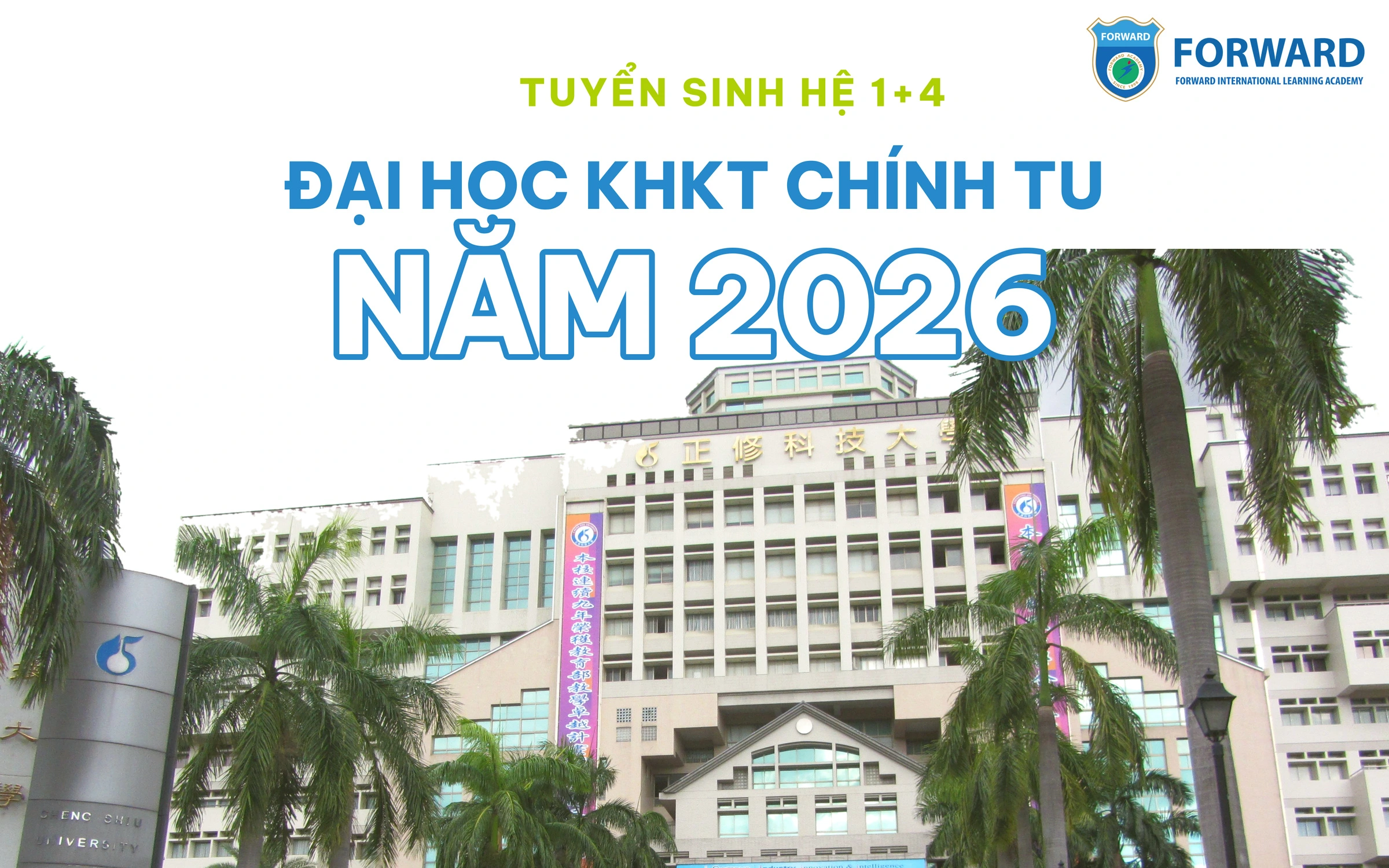
General Introduction
- English Name: Cheng Shiu University
- Vietnamese Name: Cheng Shiu University of Science and Technology
- Chinese Name: 正修科技大學
- Address: No. 840, Chengqing Rd, Niaosong District, Kaohsiung City, Taiwan
- Website: https://www.csu.edu.tw/?Lang=en
Cheng Shiu University of Science and Technology (Cheng Shiu University – CSU), also known as Cheng Shiu University of Science and Technology, is a prestigious private university of science and engineering located in Kaohsiung City, Taiwan. The university was founded in 1965 and officially adopted the name Cheng Shiu University in 2003, with more than 50 years of experience in applied and practical human‑resource training.
Cheng Shiu University follows a development model focused on practice‑oriented education, emphasizing industry collaboration, internships, and the enhancement of professional competencies for students. The university offers a wide range of programs from bachelor’s to master’s and doctoral degrees, with strong disciplines such as engineering and technology, management and business, finance, information technology and other applied fields.
Located near Chengcing Lake (Chengcing Lake), the campus provides a green, tranquil learning environment with convenient transportation. Cheng Shiu University also actively promotes internationalization of education, welcoming international students, including Vietnamese students, and provides numerous support programs for academic life, daily living, and career planning after graduation.
Through the combination of academic foundations, practical skills, and clear career orientation, Cheng Shiu University of Science and Technology is an appropriate choice for students who wish to study in Taiwan and develop their careers in an international environment.
Application Deadline for the September Intake: June 15
International Foundation Program (1+4) (國際專修部)
General Information
- Students receive visa assistance in Vietnam and are not required to have Chinese language proficiency at the time of application (through TETO).
- Students must enroll in intensive Chinese language courses totaling at least 720 hours during the first year (approximately 20 hours per week).
- Students are not required to provide a bank‑statement proof of funds; only a minimum balance of USD 6,000 is needed.
- Students are permitted to apply for a work permit with a maximum of 20 hours per week.
Chinese Language Program (1 Year)
Chinese Courses (One Year) – 華語先修課程 (1年)
Study Period: Fall 2026 semester; 2 semesters (September 2026 – August 2027)
Entry Requirement: High school graduation
Application Deadline: Mid‑June 2026
Tuition Fee: NT$27,000 per semester
Dormitory Fee: NT$15,000 – NT$17,000 per semester (base price)
Insurance Fee: NT$3,000 (semester 1); NT$4,956 (semester 2)
Scholarships:
- A scholarship that reduces tuition for one semester of Chinese language study is available, however the university does not guarantee part‑time employment placement.
- Free dormitory accommodation for students with outstanding academic performance.
Bachelor’s Program (4 Years)
Professional Courses (4‑Year Bachelor Degree) – 專業課程 (4年制學士班)
After completing the one‑year Chinese language program, students must achieve TOCFL A2 level to continue with their major studies.
Students may choose the major of Electrical Engineering or Mechanical Engineering.
Students must select their major before enrollment in the International Foundation College.
Tuition Fee: NT$54,735 per semester
Dormitory Fee: NT$15,000 – NT$17,000 per semester (base price)
Insurance Fee: NT$4,956 per 6 months
Scholarships:
- USD 3,500 unconditional scholarship (if eligibility criteria set by the university are met, it may be applied to fourth‑year students).
- Students may apply for a living‑expense scholarship if they complete an off‑campus internship for an entire semester.
- Free dormitory accommodation for students with outstanding academic performance.
(Source: University website)
For further details, please contact Forward.





Comments & Q&A with Forward
Have questions about admission requirements, scholarships, or tuition? Leave your question below!