The TOCFL exam (English: Test of Chinese as a Foreign Language – 華語文能力測驗) is a standardized Mandarin proficiency test administered by Taiwan. It is overseen by the Steering Committee for the Test Of Proficiency‑Huayu SC‑TOP (國家華語測驗推動工作委員會), which operates under the Ministry of Education of the Republic of China (Taiwan).
The TOCFL exam is not administered in Mainland China, Hong Kong or Macao — these regions use the HSK exam organized by the Office of Chinese Language Council International (commonly referred to as Hanban 汉办). Conversely, the HSK exam is not offered in territories administered by the Republic of China such as Taiwan or Kinmen.
About the TOCFL exam
TOCFL is a standardized language‑proficiency test developed for non‑native Mandarin speakers. It is the result of a collaborative project among three institutions: the Mandarin Training Center, the Graduate Institute of Teaching Chinese as a Second Language, and the Psychological Testing Center of National Taiwan Normal University.
The project was launched in August 2001, and the exam was first administered in 2003. To date, the exam has been held in more than 60 countries. A new version of the test, developed since 2008, has been administered since 2013.
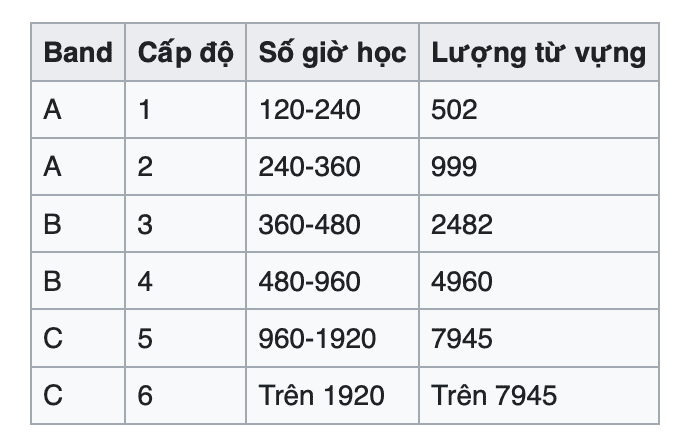
The new version comprises three bands (A, B, and C), each divided into two levels, for a total of six levels.
Band A includes Level 1 (Introductory 入門級) and Level 2 (Basic 基礎級).
Band B includes Level 3 (Intermediate 進階級) and Level 4 (Advanced 高階級).
Band C includes Level 5 (Fluent 流利級) and Level 6 (Proficient 精通級).
Purpose and applications
Candidates who pass any TOCFL level receive the corresponding certificate. The certificate can be used as proof of language proficiency for:
- Applying for Taiwanese scholarships
- Enrolling in undergraduate or college programs in Taiwan
- Meeting the language‑standard reference used by university entrance committees for foreign applicants
- Providing evidence of Mandarin proficiency when seeking employment
Target examinees
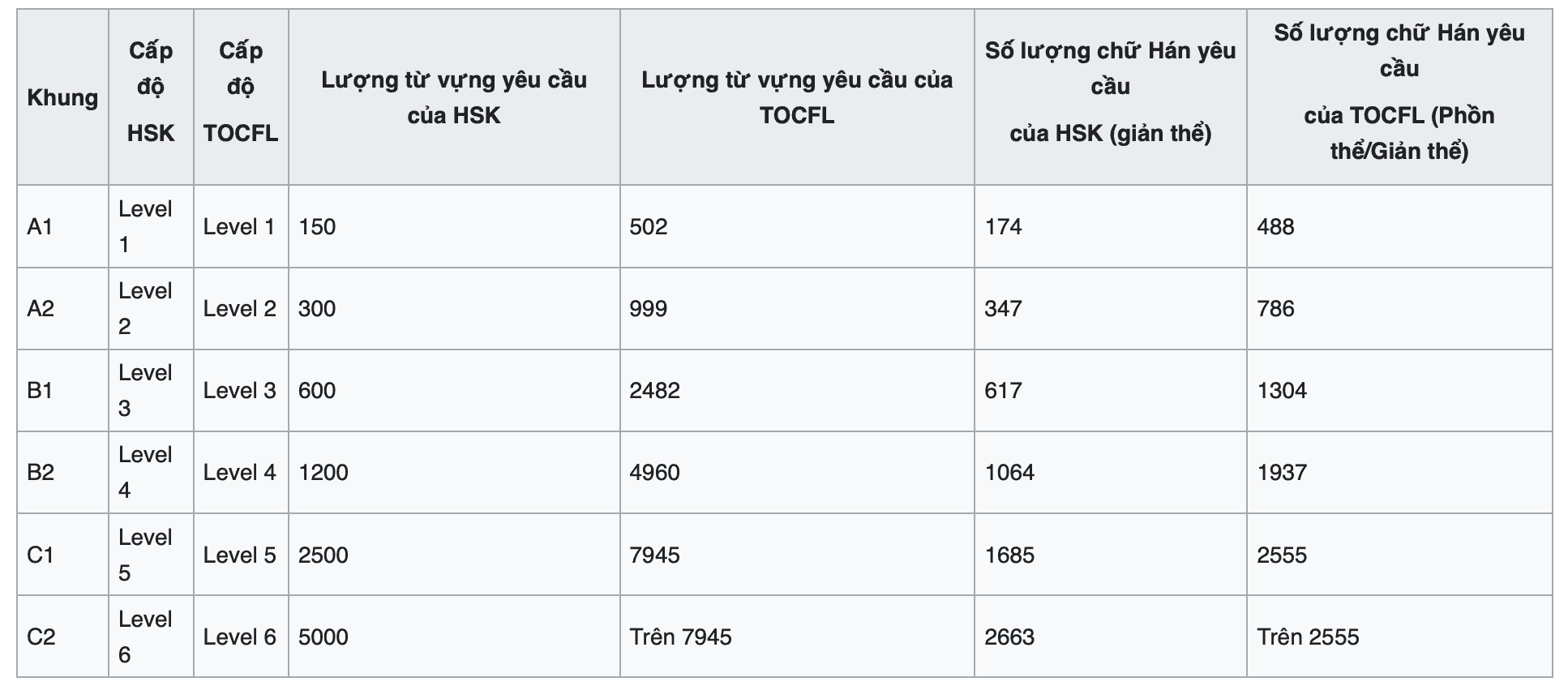
TOCFL assesses Mandarin proficiency for non‑native speakers. The table below provides reference figures for the number of study hours and vocabulary size required for each level. These hour estimates assume a context where Mandarin is the primary language; in regions where Mandarin is not the primary language, the required study hours should be roughly doubled.
Exam structure and results
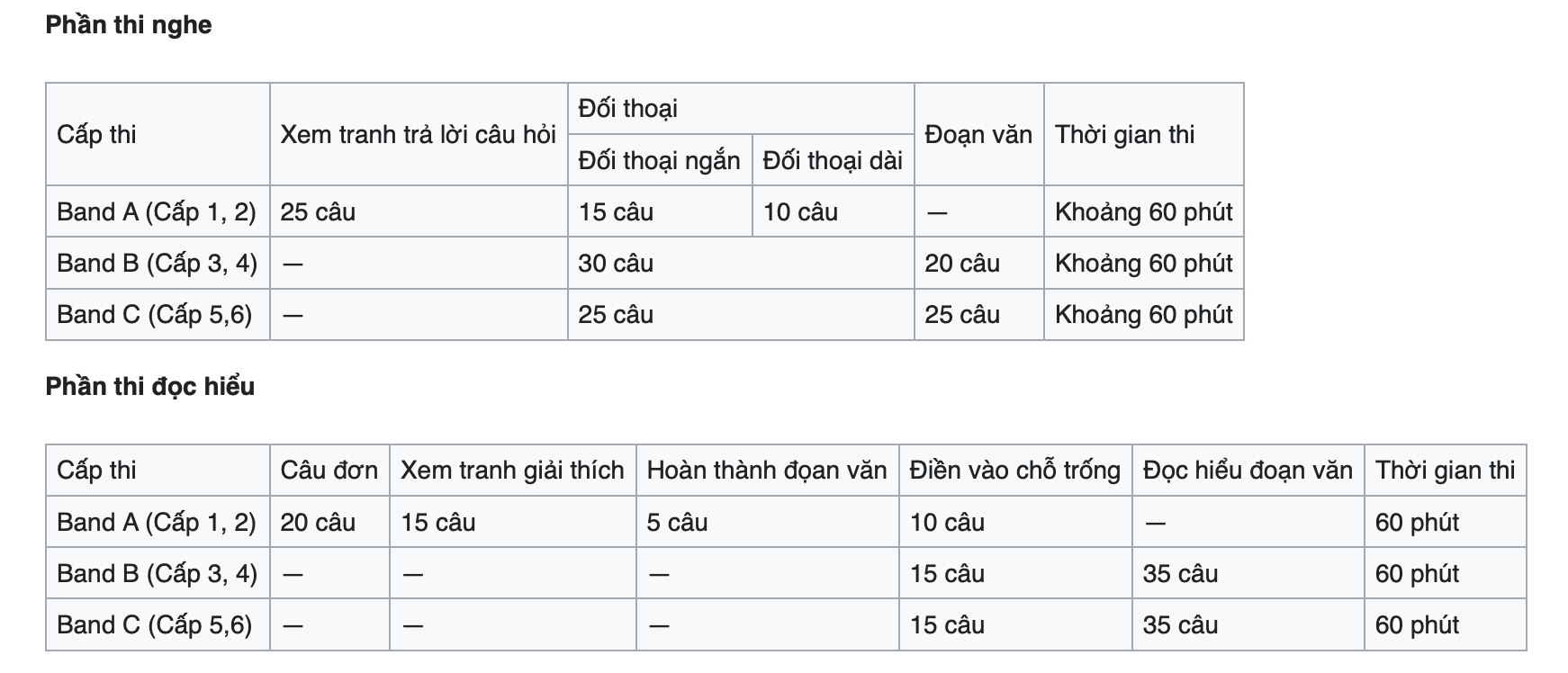
The test may be administered in either Traditional or Simplified characters, depending on the candidate’s registration. Note: examinations held in Taiwan must be taken in Traditional characters.
Test locations
Outside Taiwan (the Republic of China), the exam has been offered internationally since 2006. According to the official SC‑TOP website, the exam is currently administered in 21 countries.
- Asia‑Pacific — Australia, India, Indonesia, Japan, South Korea, Malaysia, Thailand, Vietnam.
- Latin America — Nicaragua, Paraguay.
- Europe — Austria, Belgium, France, Germany, United Kingdom, Poland, Russia, Sweden, Switzerland.
- North America — Canada, United States.
Among the listed countries and territories, Nicaragua and Paraguay recognize the Republic of China (Taiwan) as the sole legitimate government of China.
Comparison with the HSK exam
The six TOCFL levels correspond to the six levels of the CEFR (Common European Framework of Reference for Languages) established by Cambridge Assessment and the European Council, whereas the highest HSK level (Level 6) is often equated by some evaluators only with CEFR B2 or C1 (approximately TOCFL Levels 4–5). When comparing required vocabulary size and the number of Chinese characters for each level, the TOCFL demands a larger vocabulary. Overall, for comparable levels, the TOCFL is generally considered more challenging.


Comments & Q&A with Forward
Have questions about admission requirements, scholarships, or tuition? Leave your question below!